Could tailings become a raw material rather than a waste product? That question formed the starting point for a study by Master of Science students from Uppsala University, who explored how residual material from Sydvaranger’s future mining operations could be used in new industrial applications. The results point to several promising opportunities for creating circular material flows.
Through a long-standing collaboration with STUNS and Uppsala University, we at Grangex have benefited from several valuable contributions in our efforts to develop sustainable flows and innovative processes across our projects. This year, seven students from the Master of Science programme in Environmental and Water Engineering took on the task of exploring potential applications for tailings from Sydvaranger’s future mining operations.
Pursuing Efficiency and Sustainable Flows
The students based their work on the assumption that both the mine and receiving industries could benefit from a more sustainable value chain if applications were found where tailings could replace virgin materials in industrial processes. In this way, mining waste becomes a resource, allowing natural raw materials that would otherwise be consumed by these processes to remain untouched.
Criteria and Results
The students applied a methodology that combined a literature review with documentation contained in relevant standards and regulatory requirements governing the recycling of waste and secondary raw materials. Their assessment was based on five criteria evaluated side by side: economics, technical feasibility, circularity, energy consumption and the risk of future contamination – all key factors in determining the overall sustainability of a process.
“If you want to create real change, visions alone are not enough. It is about finding solutions that are both sustainable and practical to implement,” says Tom Ysu, one of the students behind the study.
In a multi-criteria analysis, the group combined findings from the literature review with data from Sydvaranger to evaluate 18 different processes across the construction, agricultural and metal extraction sectors.
An overall score of four or higher indicated strong potential for the circular use of Sydvaranger’s tailings. In particular, three applications stood out.
“We found that autoclaved bricks showed the greatest potential. It is a particularly interesting solution because it could incorporate large volumes of material into the construction sector. Close behind were soil improvement and road base stabilisation applications,” says Tom.
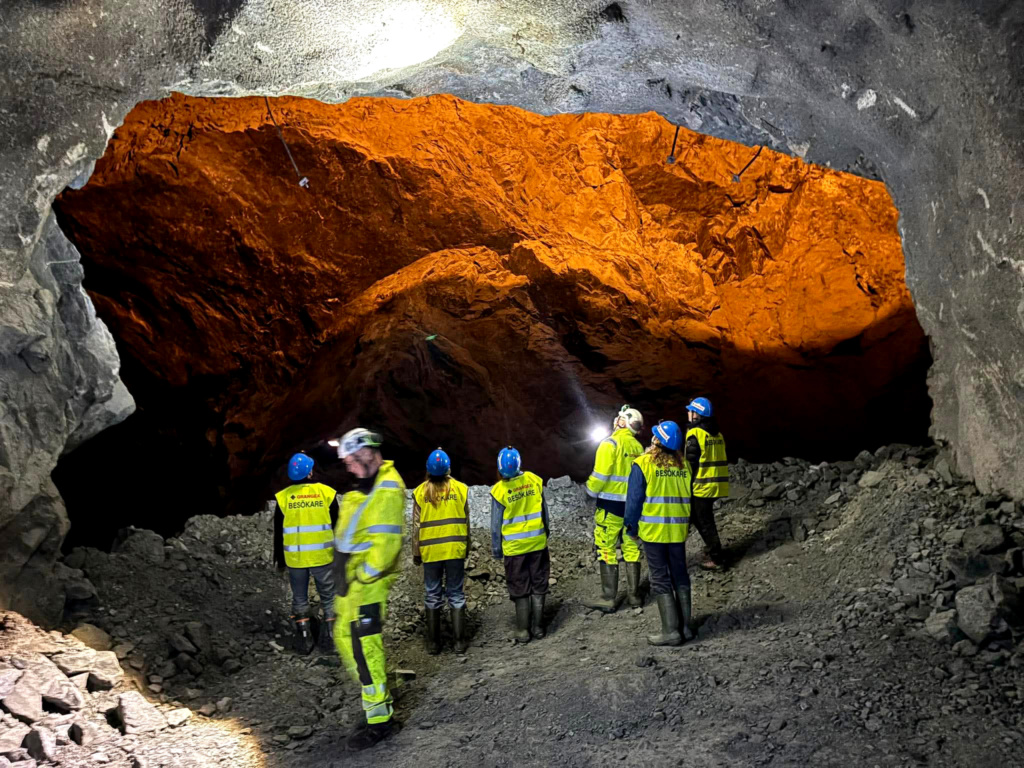
By identifying applications in which tailings replace virgin materials in industrial processes, both the mine and downstream industries can benefit from a more sustainable value chain.
Highlighting New Opportunities
The results demonstrate how residual materials can find new applications in entirely different industries, creating interesting opportunities beyond the traditional mining value chain.
“This study was carried out using a systematic approach. It highlights several exciting opportunities for circular material flows and provides highly valuable insights. We are impressed by the students’ work and grateful to have this study as a foundation as we continue our efforts to develop sustainable applications for Sydvaranger’s tailings,” concludes Lisa Malm, Head of Process and Technology at Grangex.