Historically, waste characterisation has not been an area of major focus for industrial operations. However, as environmental requirements have become more stringent and the ambition to do things right from the outset has grown, many companies have begun to rethink their approach. At Grangex, waste characterisation is a key part of the preparations for the restart of the Sydvaranger mine. With the support of the consultancy Geosyntec, we have assessed the mine’s environmental impact from residual materials such as waste rock and tailings.
When characterising extractive waste, i.e. waste from mineral extraction, the focus is typically on the residual materials waste rock and tailings. The results are used to ensure that the waste can be managed, disposed of and, in some cases, recycled in a safe and appropriate manner. The characterisation process follows European guidelines that define how samples are selected and collected, as well as which tests are to be carried out. It is therefore natural that the investigations begin with drill core samples from the mining area.
“In order to select the right samples, we first need to carry out a thorough review together with the mine’s geologists. They carry out the geological mapping, review the drill cores and select the appropriate material for us,” says Erik Karlsson, geochemist at Geosyntec.
The selection of samples is representative of the composition of the mine. Samples are taken based on the geology of the open pits, the volume of rock to be extracted, and the types of rock present in the deposit. In the case of Sydvaranger, the composite sample consisted of eight different rock types. Once the samples are in place, they are characterised using static and kinetic tests in a laboratory setting. These analyses cover everything from mineralogy and total concentrations to the conditions under which various substances may leach, as well as the estimated extent of leaching over time. The tests are carried out using so-called humidity cell tests.
“This allows us, among other things, to understand the characteristics of the rock, which is important for assessing, for example, which substances may be released into surrounding land and watercourses when rainwater comes into contact with the rock. We determine whether there is a risk that the leachate could acidify the environment or carry environmentally harmful metals,” says Erik.

From open pit to recipient – the environmental impact of mine water
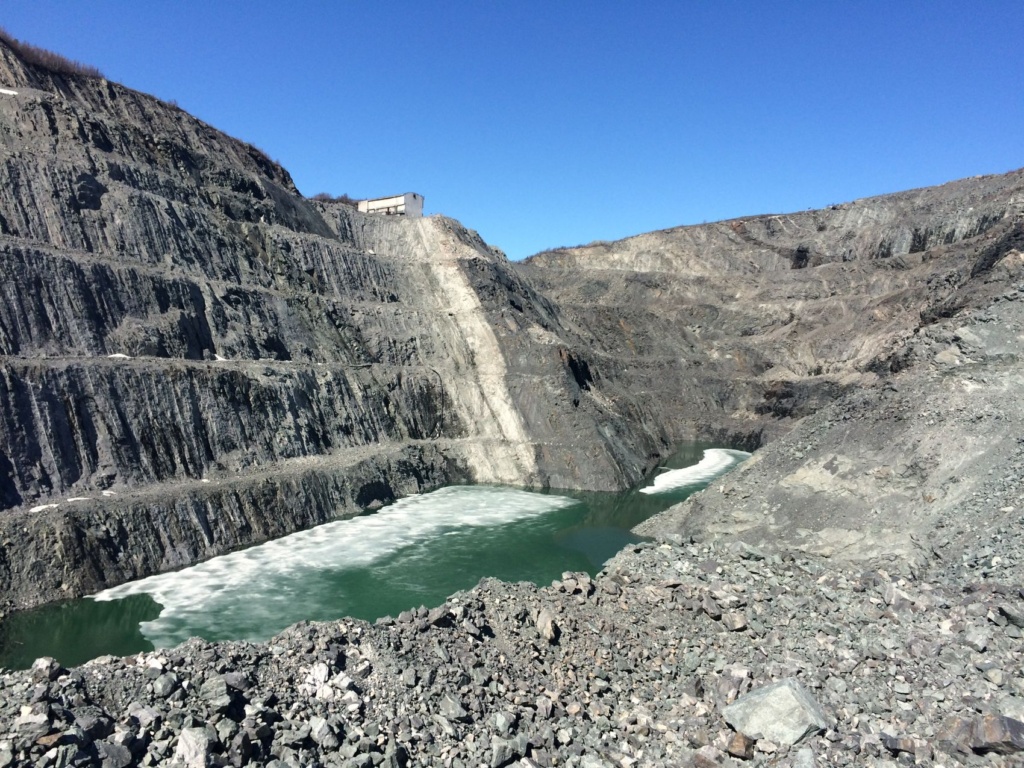
The rock at Sydvaranger is dense, meaning that relatively small amounts of water infiltrate the mine. As a result, the need for dewatering is limited. The low level of water ingress also leads to minor blasting losses, in contrast to situations where explosives come into contact with large volumes of water, which reduces their performance and prevents full detonation. Undetonated explosives may then adhere to the walls of the open pit and to the surfaces of the blasted waste rock, where they are exposed to precipitation that can transport substances into surrounding waters—the so-called receiving waters—in the vicinity of the mine.
To assess the impact of mining operations on the receiving waters, Erik has applied a model in which nitrogen leaching is evaluated together with the accumulation of other substances. This is an internationally recognised method that takes into account particle size, water availability and temperature. As part of the baseline assessment ahead of the restart of Sydvaranger, Geosyntec has also investigated surface water in the open pits as well as leachate from the mine’s existing waste rock dumps.
Sustainable management from operations to closure and aftercare
In mining, a significant part of environmental and waste planning concerns how residual materials are to be managed in a sustainable way for future generations. In the kinetic tests conducted in a laboratory environment, the weathering of minerals is accelerated in order to observe the behaviour of the waste rock. Based on the results, Geosyntec assessed the long-term impact of the waste rock dumps. The analytical programme also included tailings. As the mine is not yet in operation, Geosyntec used tailings from Sydvaranger’s large-scale pilot tests.
“All the results show that we are dealing with a ‘benign’ bedrock at Sydvaranger. We have not been able to identify any concentrations of harmful heavy metals or other substances that could have a negative impact on the environment; most parameters are at levels comparable to naturally occurring background levels. Our challenge is to ensure that nitrogen residues from blasting remain at levels that do not adversely affect the receiving waters,” says Jenny Eriksson, Head of Environment and Sustainability at Grangex.
Results, classification and approval
The entire waste characterisation programme at Sydvaranger began in early November 2024 and was carried out in a laboratory environment until Midsummer 2025.
“By that point, we had reached a baseline at which we assessed the values to remain stable over time. In addition, we were able to conclude that there was no longer any risk of acidic leachate formation, and could therefore conclude the long-term experiments,” says Erik.
Once the laboratory analyses were completed, the remaining sample material was sent to Sydvaranger for storage, where it is retained for potential use in supplementary analyses in the future. Geosyntec subsequently prepared a characterisation report, including an assessment of the results and comparisons against the limit values set out in Norwegian legislation. Finally, the results were evaluated and the waste was assigned a classification.
“None of the concentrations in our sample results stand out. They remain within acceptable levels even when we assess the waste rock dump as it is expected to appear at full scale during Sydvaranger’s operations,” Erik concludes.
FACTS:
Samples collected as part of Sydvaranger’s waste characterisation programme relate to the mine’s future extractive waste, namely waste rock and tailings.
The analyses covered total concentrations of various major elements and trace elements, including copper, arsenic, nickel and uranium. These were compared both with background concentrations naturally present in the bedrock and with relevant limit values, including those applicable to material recycling for use in construction materials. The characterisation also included so-called ABA tests—analyses of the rock’s acid-generating and buffering potential. The results of the ABA tests were verified through humidity cell tests, in which the leaching processes of substances were accelerated. The mineralogical composition was analysed in a laboratory setting, as was sequential leaching, which shows under which environmental conditions different substances may be released.
All tests were evaluated individually, after which Geosyntec carried out an overall assessment. The results from the humidity cell tests formed the basis for modelling the quality of mine dewatering water and leachate from the waste rock dumps.
* Leachate is water that has percolated through waste or soil and, in doing so, has carried various substances with it. When it contains contaminants, it may need to be collected and treated in order to avoid negative impacts on the environment.