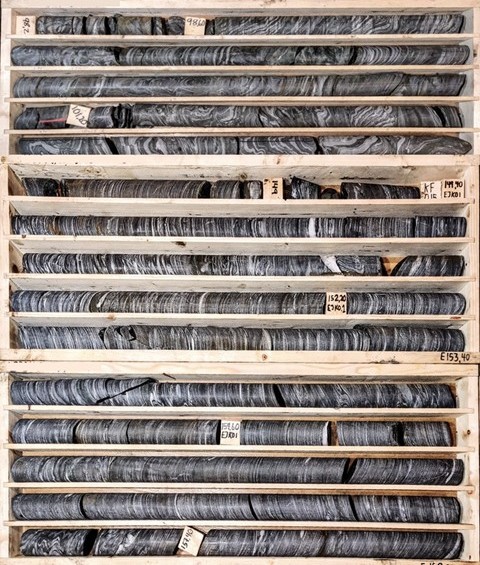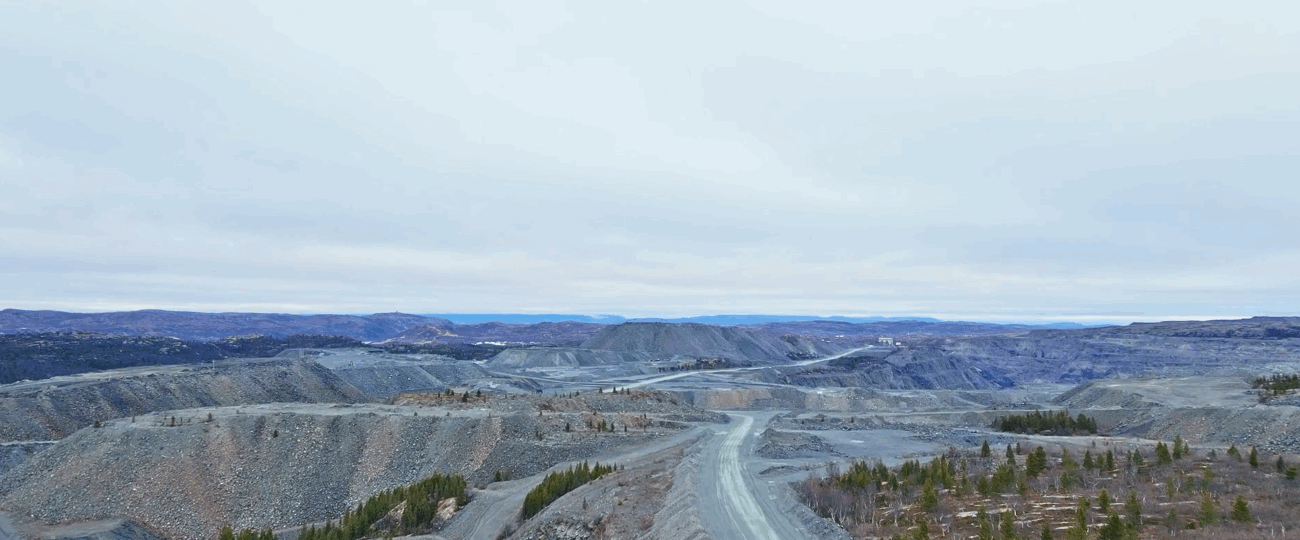
Sydvaranger is one of Europe’s most well-documented and predictable iron ore resources. First discovered in 1866, it has been mapped by leading geologists, verified through recent drilling campaigns and modern analyses.
As the mine restarts under Grangex’s management at the end of 2026, it will have an expected production rate of 3 million tonnes super high-grade magnetite concentrate per year.
The deposit is a 3.8-billion-year-old classical sedimentary quartz-banded iron ore formation in northern Norway (Figure 1). The ore field stretches approximately 12 km in a roughly north-south direction, comprising a number of interlinked iron deposits from Bjørnevatn in the north, to Grundtjern, Søstervann, Tverrdalen, Bjørnefjell, Fisketind, Oskarsmalmen, Blixmalmen, Jerntoppen, Hyttemalmen and Kjellmansåsen in the south.
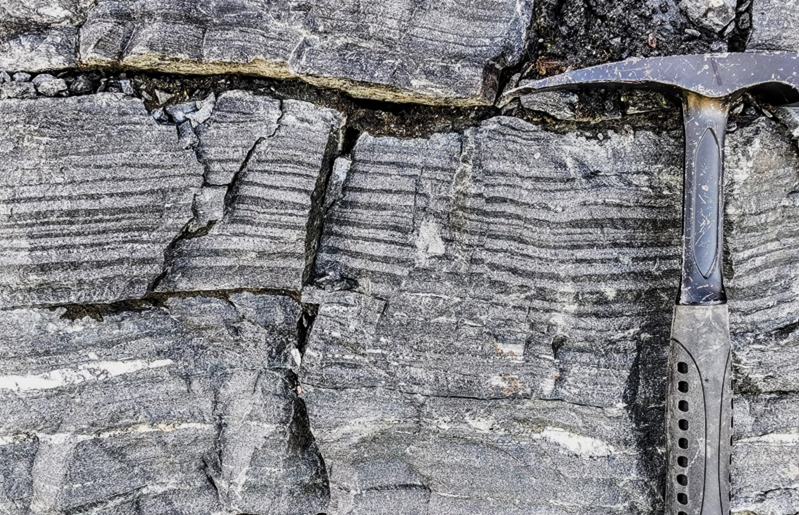
Magnetite has a magnetic property that is made use of in the process, during separation from the associated minerals.